Showing posts with label Alexandre Nerium. Show all posts

Friday, September 2, 2016

Words in Poems: Alexandre Nerium (II)

Fotografía de Sebastião Salgado


Debúllanseme as bágoas no rostro da memoria, chafarices de mágoas acendendo a lareira, gumes enferruxados na friaxe da aurora onde a tersura labra negras ondas esgrevias. Canta humilde palabra na terra axeonllada batendo nos valados os xugos contra as pedras!, cantos fieis cavadoiros chorando nos recantos!, cantos tristes munidos cargados de paciencia! Decruamos degoiros coa fame omnipresente de salgados lados nos estigmas da area, peneiramos os loiros cabelos das espigas nos delampos perdidos da tarde treboenta, esgazamos os coiros na bravura do tempo cos pés aterecidos, exhaustos na pobreza.

Nocturnidade do sal (2008)

Wednesday, August 3, 2016

Words in Poems: Joseph Conrad

Joseph Conrad (1857–1924) died on a day like today. He was a Polish author who wrote in English, after settling in England.  Granted British nationality at age 28 in 1886, he always considered himself a Pole and resented being classed by some critics with Russian novelists as a "Slavonic" writer.  Conrad is regarded as one of the great novelists in English, though he did not speak the language fluently until he was in his twenties (here's some food for thought for all adult learners of a foreign language). He wrote stories and novels, often with a nautical setting, that depict trials of the human spirit in the midst of an indifferent universe. 
Source: https://upload.wikimedia.org
While some of his works have a strain of romanticism, he is viewed as a precursor of modernist literature. His narrative style and anti-heroic characters cast a "fiendish spell" on readers, as The Telegraph put it in this article. He was able to write about the sociopolitical landscape of his time (the heyday of the British Empire), while at the same time plumbing the depths of the human soul. I won't ever forget his novella Heart of Darkness (1899), which takes place one night on a steamer by the Thames, with the simple plot of one man's search for another, but throwing in the complexities drawn from his experience in the Congo nine years before. It is hard for the reader to forget the river, and the "heart of darkness" it penetrates. White civilization versus the jungle. 

And to commemorate him, a poem by Malcolm Lowry (1909-1957) which makes reference to words, along with its translation into Spanish, from his book Selected Poems (1962), and which sort of reminds me, for some reason, of Alexandre Nerium, who also "requited sea-wariness" to grapple with words. 

Joseph Conrad

This wrestling, as of seamen with a storm
Which flies to leeward - while they, united
In that chaos, turn, each on his nighted
Bunk, to dream of chaos again, or home - 
The poet himself, struggling with the form
Of his coiled work, knows; having requited
Sea-wariness with purpose, invited
What derricks of the soul plunge in his room.
Yet some mariner's ferment in his blood
- Though truant heart will hear the iron travail
And song of ships that ride their easting down - 
Sustains him to subdue or be subdued.
In sleep all night he grapples with a sail!
But words beyond the life of ships dream on.

Joseph Conrad

Esta lucha es similar a la de los marineros con la 
tormenta
que se abate a sotavento - aunque ellos, unidos
en ese caos, recurren a su cucheta
para soñar nuevamente con el caos o con el  hogar.
Lo sabe el propio poeta, que lucha con la intrincada
forma de su oficio; renunció a las faenas del mar
con el propósito de escribir, pero instaló en su  cuarto
las torres de perforación que exploran el alma.
No obstante, un fermento de vida marinera en sus venas
- aunque el perezoso corazón escuchará los férreos
afanes
y los cantos de las tripulaciones que viajan al oriente- 
lo anima a dominar o ser dominado.
¡Y en sueños lucha toda la noche para sujetar una  vela!
Pero las palabras, más allá de la vida de los barcos, 
sueñan.


Words in Poems: Alexandre Nerium (I)


Nocturnidade do sal (2008)

Friday, February 26, 2016

A Week of Discoveries: COSTA DO SOLPOR, ALEXANDRE NERIUM, AS CREBAS and ROSALÍA DE CASTRO's letters

Last Saturday I had the opportunity to go on a literary hike which took us along the locations that inspired or are mentioned in  the book Costa do Solpor, written by Xosé María Lema. The story is meant to be a follow-up of what happened to the Hispaniola, the schooner from Stevenson's novel Treasure Island. It is a beautifully written book, with carefully chosen words and expressions and in which the location is almost a character in itself.

I really enjoyed the hike and the sights, but I also loved the human dimension of the activity. In fact, we had the opportunity to listen to Alexandre Nerium, a poet from Fisterra who showed us the Castelo de San Carlos and also delighted us with a touching poetry recitation. I am including below one of my favourites:

Cabaleiro do mar

Cabaleiro do mar, fun cabaleiro
dun castelo de estrelas desvalidas,
entre cachóns de anémonas perdidas,
entre cinzas que afloran no salseiro.

Cabaleiro do mar, fun cabaleiro
na galera de mans esvaecidas,
entre bágoas de sal esmorecidas,
amarrado á mesana dun veleiro.

Cabaleiro do mar; de pés mollados,
entre alfanxes sombríos, ondulados,
de azagaia sutil e nacarada.

Cabaleiro de soño e de serea
tumbado no devalo da marea
sen pavés, sen loriga e sen espada.

(De De mar e vento, Espiral Maior, 1997)

Another big discovery for me was Miro Villar, also a poet from the area (Cee). He did not recite any poem but as soon as I got home I "googled" him (don't we all do that nowadays?) and I came across another unexpected treasure, which was his intimate, heartwarming blog.

http://crebas.blogaliza.org/


This is a very detailed, thorough blog which I honestly think could serve as an encyclopedia or reference list for anyone who, like me, loves poetry but never really had an education in this genre because, let's be honest, how much poetry was included in our school programmes? I don't know what is being taught nowadays, but as for me, we did not go beyond Antonio Machado or Jaime Gil de Biedma in Spanish. In Galician we never even read a whole book of poems, we just read isolated texts that appeared in our textbook. I guess something similar happens with theatre, which I think it's a little sad. 

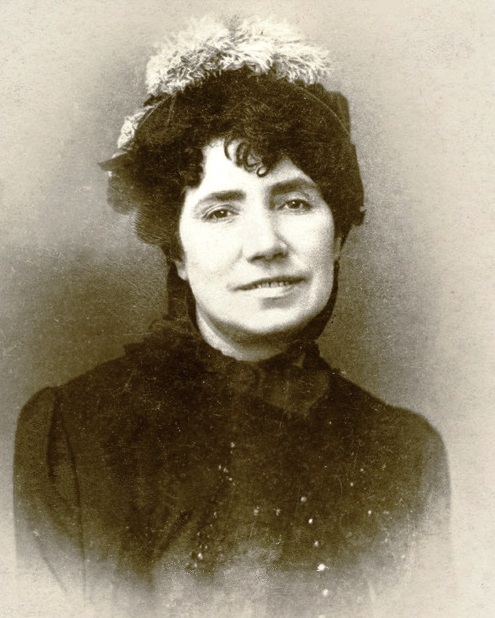
Anyway, it was here that I found a reference to Rosalía de Castro's letters, which are available online here for anyone wishing to read them.


They are beautiful letters, very much in line with her poems, where she, as they say on this website, "takes her dose of sorrow without dilution, but remarkably, also without bitterness". I feel privileged to be able to access these letters nowadays, years after she has been long gone, but I also feel that we are somehow prying into her life. 

It made me think of an experience Patri Fernández and I had when we visited Viñetas desde o Atlántico in August last year. We were visiting the book stalls and all of a sudden we found a box with vintage cards. Accidentally, we noticed that some of them were written and we couldn't help but reading them. It turns out there were about 15 cards that had been exchanged between a couple during the 70es. She had been living in Coruña and he was from South Spain. Tender words being exposed to eyes which were not meant to participate in this intimate exchange.

What will happen to the letters/cards I have exchanged? Will they ever be found in a street market or in a museum exhibit? I can't help but wishing the contents stay private, between me and the recipient. A one-time act of communication. 

But I guess once you send those letters, any control over them is gone, you have to let those birds fly free... and in any case I am sure glad I can read Rosalía's letters nowadays.