Showing posts with label NPR. Show all posts

Tuesday, August 2, 2016

Letters in Books: Las cartas de Groucho

Hace un par de meses, como comenté en una anterior entrada, adquirí el libro Las cartas de Groucho (1975, traducción al español de Jos Oliver del original The Groucho Letters. Letters from and to Groucho Marx (1967)) con introducción de Arthur Sheekman


Puede que no todo el mundo haya visto las películas de Groucho Marx (1895-1977), pero todos reconocemos al cómico y sus icónicas e inconfundibles señas de identidad: cejas pobladas, bigote ancho y por supuesto el imprescindible puro. Y es que, como el propio Marx dijo, los buenos cómicos son "mucho menos comunes y mucho más valiosos que todo el oro y las piedras preciosas del mundo". Pero, ¿qué es lo que ha hecho perdurar la imagen de Groucho en nuestra memoria? ¿Sus películas? ¿Su simpatía natural? ¿La ironía acérrima?

Fuente: https://c2.staticflickr.com
En una entrevista de NPR a Lee Siegel, biógrafo de Marx (Groucho Marx. The Comedy of Existence, 2016), Siegel sugiere que Groucho, más que provocarnos la risa por el elemento cómico de sus comentarios, lo hace por la sorpresa que producen. Tanto él como sus hermanos triunfaron comportándose en público como si estuviesen privado, diciéndole a su audiencia cosas que los demás sólo les contaban a sus amistades íntimas o a sus psiquiatras. 

En este sentido, su correspondencia constituye un documento revelador de sus aficiones, manías, amigos y enemigos y de que no se le daba nada mal escribir. Sheekman recoge en la introducción el telegrama (p. 7) que Groucho envió como respuesta a sus editores cuando le sugirieron la idea de publicar su correspondencia:

RECIBIDA SU CARTA E INMEDIATAMENTE QUEMADA. PREFIERO QUE LOS EXTRAÑOS NO HUSMEEN MI CORRESPONDENCIA. LO DISCUTIRÍA CON DETALLE PERO MI SECRETARIA TIENE UNA CITA DENTRO DE CINCO MINUTOS... CONMIGO. 

Al final, Groucho cambió de idea, y el libro recoge cartas (cuyos originales se conservan en la Library of Congress) a sus hermanos, su hijo, su médico, el novio de su hija, amigos, compañeros de profesión (Eddie Cantor y Jerry Lewis entre otros), empresarios varios (Howard Hughes o el presidente de la Chrysler), escritores (E.B. White, James Thurber o T.S. Eliot) o periodistas y se agrupan en diez secciones: La industria del cine, Vida privada, Hablemos de televisión, Groucho y otros hombres de letras, Grouchy, Broadway y Hollywood, Para publicar, Amigos en el extranjero, Incursiones desmayadamente políticas y Sin contemplaciones

Algunas cartas son irónicas, otras tiernas, sarcásticas, desdeñosas, agudas,... pero siempre son Groucho y conservan su esencia y su ingenio. Además, como Falstaff, inspira la comedia en otros, pues la mayoría de las cartas escritas a él están sazonadas de su mismo espíritu cómico. 

Personalmente, me quedo con la carta a los Warner Brothers para dar respuesta a una amenaza legal cuando los hermanos Marx estaban a punto de rodar A Night in Casablanca (1946) por considerar que  plagiaba el nombre Casablanca (1942, con Humphrey Bogart e Ingrid Bergman como protagonistas). Groucho se defiende haciendo gala de una elegante astucia y picardía: 

"Sencillamente, no comprendo su actitud. Aun cuando pensaran en la reposición de su película, estoy seguro de que el aficionado medio al cine aprendería oportunamente a distinguir entre Ingrid Bergman y Harpo. No sé si yo podría, pero desde luego me gustaría intentarlo"  (p. 16)

"Ustedes reivindican su Casablanca y pretenden que nadie más pueda utilizar ese nombre sin su permiso. ¿Qué me dice de "Warner Brothers"? Es de su propiedad, también? Probablemente tengan ustedes el derecho de utilizar el nombre de Warner, pero ¿y el de Brothers? Profesionalmente, nosotros éramos "brothers" mucho antes que ustedes" (p. 17)

Las cartas a Arthur Sheekman, crítico dramático, escritor y guionista son divertidísimas:

"No soy capaz de dormir. Seguramente tú te preguntarás: "¿Por qué no puede dormir? Tiene dinero, belleza, talento, vigor y muchos dientes". Pero la posesión de todas esas riquezas no tiene nada que ver con ello" (p. 25)

"Anoche cené con Chaplin (...) y me dijo, entre otras cosas que no es judío pero que le gustaría serlo. Dijo que era en parte escocés, inglés y gitano, pero creo que no está muy seguro de lo que es" (p. 28)

"Querido Sheek:
No he sabido más de ti. Imagino que te has muerto. Si no respondes a ésta, mandaré una corona  a la Calle 48" (p. 36)

Otros extractos dejan entrever algunos vislumbres de ternura pero siempre como decíamos aderezados con sus características dosis de humor:

(a su hijo Arthur) "Esto es realmente (la) vida. No se necesita pelota de golf, ni caddy, ni raquetas, ni cuerdas de tripa anudadas. Todo lo que se necesita es un corazón intrépido, hombros fuertes, mucho viento y un estómago de hierro colado" (p. 47, 48)

(a una niña) "Ahí va el autógrafo. Te mandaría un mechón de mi pelo pero está lavándose en la peluquería" (p. 59)

(a Alex Gottlieb, productor cinematográfico) "Han pasado muchas lunas y la estación de las lluvias, con sus habituales diluvios, está a punto de inundarnos con agua suficiente para hacer que Noé (si está en algún lugar de las inmediaciones) empiece a recoger dos de cada, otra vez" (p. 65)

(a Goodman Ace): "Debo regresar rápidamente para ver cuán diestra y profesionalmente el arquitecto y sus secuaces excavan, no los cimientos de la casa de mis sueños, sino los restos de mi cuenta bancaria" (p. 128)

Destacan para mí aquellas cartas que aluden a cartas en sí:

"He recibido las cartas y el cheque. Esta vez guardaré el cheque e ingresaré las cartas. ¡No voy a correr riesgos!" (p. 25)

"Querido Arthur:
No puedo comprender por qué no recibes ninguna carta mía. Quizá sea porque no te he escrito" (p. 52)

(de Goodman Ace a Groucho) "Hubiera contestado antes a tu carta, pero no me habías mandado ninguna" (p. 111)

(a Goodman Ace): "Abrazos para ti, para Jane y para todo tu dinero, y cuéntame algo de ti aunque sea sólo en una carta de veinte páginas" (p. 136) 

(a E.B. White, escritor): "No es fácil escribir ni siquiera una breve nota al hombre que acaba de publicar un libro sobre los escollos de la lengua inglesa. Mire, yo escribo de oído. Intenté escribir a máquina pero me pareció demasiado pesado. Intenté luego dictar a mi secretaria pero tras varios meses de vanos esfuerzos me dic cuenta de que también ella era pesada" (p. 143) 

(de Frank Sullivan): "Tu carta (...) me caldeó las entretelas del corazón. (...) Creo que estas entretelas ya están en su punto ahora y será mejor quitarlas del fuego" (p. 157)

(a Frank Sullivan): "(...) tu letra ha empeorado mucho. Suponiendo que hayas escrito este sobre, te sugiero que vuelvas a la universidad de Cornell y has un curso de repaso sobre la escritura de sobres" (p. 159)

"Hay tres razones por las que no te he escrito. La primera, que no estaba seguro de adónde iría la próxima semana; la segunda, que cuatro saltos al día dejan muy poco tiempo para escribir cartas, y la última razón y la más importante es que no se me ocurría nada que decirte" (p. 197)

(a David Susskind, animador de programas de tv): "Mantener correspondencia con usted es como escribir cartas a una mina de carbón abandonada o a un doloroso vacío" (p. 237)

(a Sheekman): "(...) he mantenido correspondencia con tu hija. Ella me escribió una larga y exuberante carta. Como respuesta, le escribí una breve y concisa nota. Ella me escribió entonces una carta dos veces más larga que la primera, así que abandoné y le mandé un ejemplar de Guerra y paz. Espero que esto la mantenga callada hasta después de las vacaciones" (p. 274)


Breves pero acérrimos son los pasajes de crítica, sobre todo los que dirige a la televisión: "La televisión es la carrera de ratas de este siglo" (p. 183); "Para mí , lo único bueno de la televisión es que me ha permitido ganar mucho más dinero del que merezco" (p. 187); " (...) la televisión (...) como sedante no tiene igual" (p. 215)

En definitiva, un libro ameno y divertido. Aún así, definitivamente, hubiese sido mejor leer la correspondencia en su versión original en inglés, pues la traducción al español a veces era mejorable, como se puede ver por los siguientes pasajes (negrita propia):

"Su retrato está enmarcado sobre la repisa (...) nadie le reconoce sin el puro y los ojos que dan vueltas" (p. 166)

"El hecho es que los planes mejor trazados de los ratones y de los hombres, etc" (p. 167)

"(...) quiero darte las gracias por tu carta de cumplido" (p. 218)

"Siento no haber podido ir a tu fiesta la otra noche, pero en el declive de mis años me he convertido en una mariposa de sociedad" (p. 231)


Saturday, March 26, 2016

Leos Janáçek's Letters

Excuse my ignorance but before my recent trip to Slovakia, I had never Heard of Czech composer Leos Janáçek, contemporary of Antonín Dvořák and Bedřich Smetana. His most famous opera is Jenůfa, which was premiered in 1904, but he is also known for his folkloristic research and studies as a music theorist.

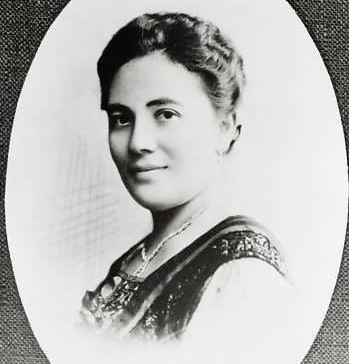
However, the reason for this entry is not his musical talent but his letters. These are the letters of a great love story. In 1917, the Czech composer met Kamila Stösslová while on holiday at Luhaçovice, a spa resort in Moravia. He was sixty-three and locked in a loveless marriage; she was twenty-six, a woman of striking good looks, the wife of an antique dealer frequently away from home. 

After the holiday, Janáçek began writing to Stösslová in what she considered an extravagant prose. She showed no interest in his work and answered with a very matter-of-factly style, in spasmodic replies, most of which Janáçek burned at her request. However, he continued to send her some 700 letters with very occasinal meetings until his death eleven years later. Kamila became his fantasy lover, his grand passion, and the inspiration for some of his greatest music, including his famous Second String Quartet. He inscribed it first "Love Letters", and then "Intimate Pages". As Janácek wrote to her: "In every work of mine there is at least a shadow of your soul..." and, capturing something of beauty he saw in her, "every note will be your dark eye."


(Click here if you would like to listen to an NPR podcast discussing the importance of this piece)

Janáçek had been married for 36 years to Zdenka Schulzová, one of his pupils at the Brno's Teachers Institute. Zdenka wrote about Kamila: "I thought she was quite nice: young, cheerful, one could have a really good talk with her, she was always laughing." She felt the couple "brought action and laughter into our sad quietness."

As for Leos Janáçek, he did, at least, know what it meant to be in love. On March 28, 1928, a few months before his death, he wrote to Kamila:

"Well, love is a wizard. Submit to it faithfully and it gives a person joy. It intoxicates, it envelops, it isolates. It creates fragrance in the air, ardor from coldness, it beautifies everything around it."

Most of these letters were suppressed until changing conditions in Czechoslovakia allowed their full publication in 1990. John Tyrrell edited and translated a comprehensive selection, concentrating on the almost daily letters of the final eighteen months, and including a selection of mostly unknown photographs in the book Intimate Letters: Leos Janáçek to Kamila Stösslová 

If the letters are sometimes so intimate that to read them feels like voyeurism, the fact is that Janáçek  as never unmindful of the chance that they might find their way into other hands. He seems to have regarded them as acts of amorous bravado, like carving lovers' hearts on trees. 'I always think to myself,' he writes in October 1927, 'will some inquisitive person spy on this daily correspondence? And (yet) it's only my conversation with you - when mountains divide us. A conversation without which I couldn't exist.'

Well, I have just ordered the book by John Tyrrell and can't wait to read their "conversations".

Quotes from: http://www.gyford.com/archive/2009/04/28/www.geocities.com/Paris/Parc/9893/leos2.html


Click here to read a New York Times article and here for an article by The Independent.


Thursday, March 24, 2016

Newly Found Letter Written by Walt Whitman for a Dying Soldier

Curiosity... the dictionary defines it as "the desire to learn or know more about something or someone." I don't know if it happens to you, but when I read a text I have this desire to know about the person behind the words, thus the "nosiness" and the wish to know more about  America’s world poet, Walt Whitman, to whom I have devoted the previous blog entry.

Walt Whitman was profoundly affected by the American Civil War (1861-1865). Too old to serve, or lacking the inclination to bear arms, he worked as a psychological nurse to wounded and sick soldiers in the Broadway Hospital in New York. 

In 1863 he moved to Washington DC where he spent several years visiting more than 50 military hospitals, and made many friendships with soldiers, writing letters home for them and corresponding with many of the soldiers themselves after they had recovered and returned to the battlefront. 

I think that, along with the fact that he spent some of his earning as a clerk for the Department of the Interior on gifts for the patients he cared for, say quite a lot about the type of person he was and how he really felt for others.

Therefore, when I read the recent piece of news in the Guardian and Público about the discovery of a letter with a line reading "Written by Walt Whitman", I was dying to know more.

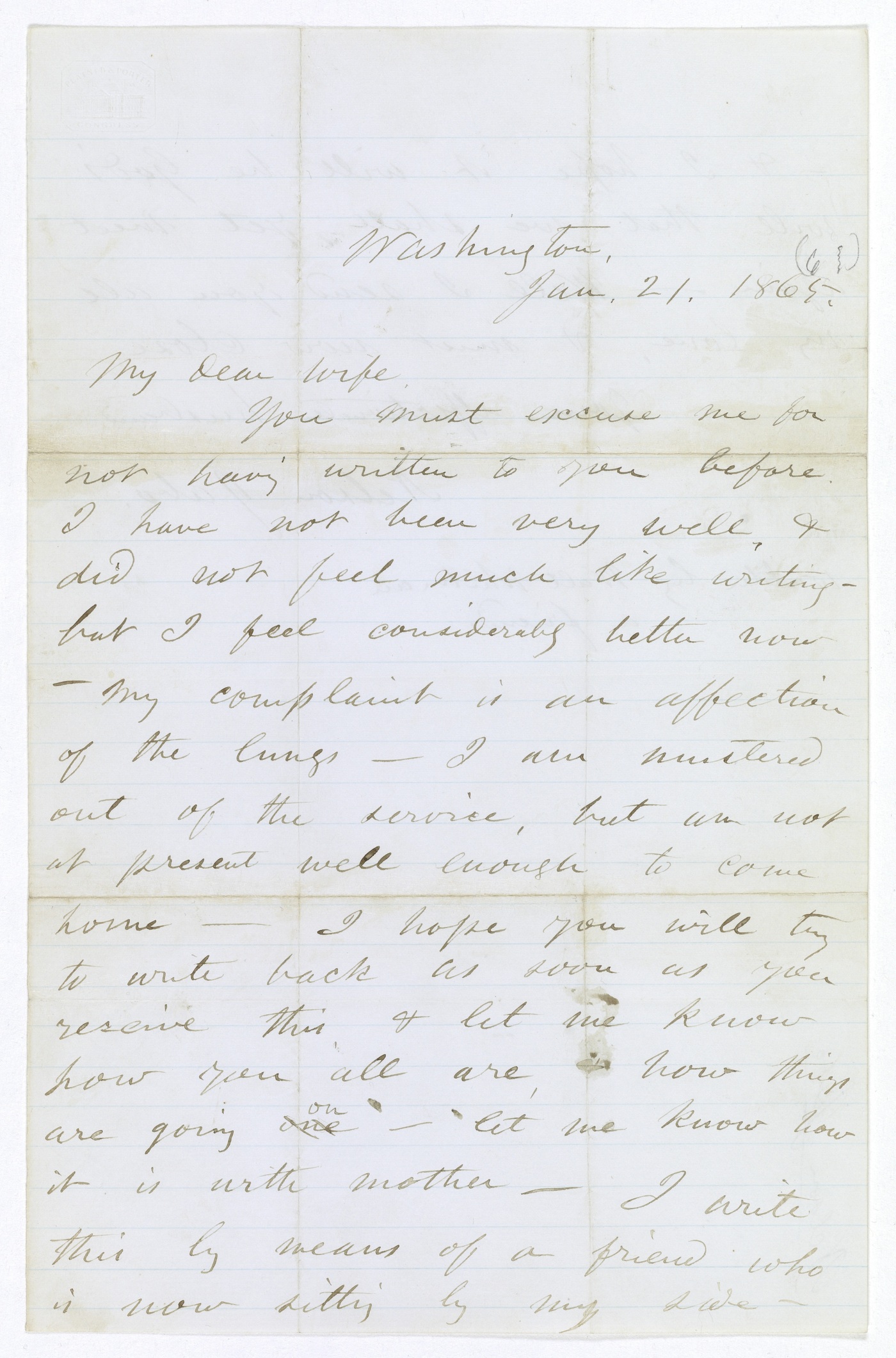
It turns out that Walt Whitman travelled to the fronts of America's Civil War in 1862 to care for his wounded brother and apparently wrote letters for soldiers, but few of them have survived. This one, was found by Catherine Wilson, one of the 60 National Archives volunteers, and it is a letter Whitman penned for Jabo, father of 6, who was dying from tuberculosis and wanted to write to his wife. 

Kenneth Price, Whitman scholar and also responsible for The Walt Whitman archive, thinks Whitman "tried to grasp the gist of what Jabo wanted to convey and then expressed clearly and straightforwardly (...) he tried to channel the sense and spirit of what Jabo wanted to convey".

Below you can see the image of the letter, and you can click on this link to NPR to see a transcription and listen to the story.

As Jackie Budell, a specialist with the National Archives concludes, "You can envision that he  (Whitman) was, in effect, kind of helping them to verbalize maybe what they weren't able to say."

What a gift for us to have writers and poets to help us fully express ourselves and put into words feelings we sometimes fail to convey.

Tuesday, March 1, 2016

Letters in Literature: Best Collections of Literary Letters (NPR)

Epistolary fiction is a popular genre where the narrative is told via a series of documents. You have almost certainly read one of these books. Letters are the most common basis for epistolary novels but diary entries are also popular. The word epistolary comes from Latin where epistola means a letter.


I have come across this NPR article which dates back to 2008 but it is still really interesting inasmuch as it gives some examples of correspondence as literature and includes some samples. I must confess I haven't read any of the books they mention but there are other books which include letters and they were quite entertaining reads, such as 84, Charing Cross Road, Dracula, or We Need to Talk about Kevin.

In the past 10 years, there has been a steady stream of epistolary literature. Notable examples include World War Z: An Oral History of the Zombie War by Max Brooks and the one I've just mentioned above, We Need to Talk about Kevin by Lionel Shriver (which we read in our book club a couple of years ago). The Griffin and Sabine series, a love affair told via letters and postcards, by artist Nick Bantock is a trilogy and another example of this form of writing.

They all go on to confirm that letters continue to fascinate us and that the art of writing letters is not fading away in the 21st century.

Sunday, February 28, 2016

Love Letters: Do We Save them? Where? Why?

"You are always new. The last of your kisses was ever the sweetest; the last smile the brightest; the last movement the gracefullest. When you pass'd my window home yesterday, I was fill'd with as much admiration as if I had then seen you for the first time...Even if you did not love me I could not help an entire devotion to you."

This is an excerpt from John Keats's love letter to Fanny Brawne, found in the book Bright Star: Love Letters and Poems of John Keats to Fanny Brawne. Although they knew each other for just a few short years and spent a great deal of that time apart due to Keats's worsening illness, which forced him to live abroad, Keats wrote again and again about Fanny - his very last poem is called simply "To Fanny" - and wrote love letters to her constantly. She, in turn, would wear the ring he had given her until her death.

Don't  you agree that there is a certain allure in love letters? The thoughtfulness, the time devoted choosing the appropriate words, the handwriting, the unsteady hand when writing a moving segment, ... I don't think a WhatsApp message has quite the same effect on the receiver.

 I strongly encourage you to listen to this podcast by Michelle Janning, a sociologist at Whitman College. Her talk, "Why Love Letters Matter, Even in the Digital Age", analyses how stuff matters in our social life, and how the things we save (and where we save them) says a lot about us. I have tried to summarize some of the aspects she discusses right below.


"Letters matter because they represent memory at both the individual and collective levels (...) Letters matter because they are the texts of our identities". They are useful for self-definition, who we are or who we don't want to be any more. But it is not only about them, when aggregated, they can give information about a collective memory.

M. Janning carried out an online survey of about 400 individuals in the USA, analyzing the use of paper letters (both in digital and paper formats), paper cards, emails, notes, Facebook messages, cell phones, landline use, Skype and Snapchat in romantic relationships. She wanted to map out the different meanings people attach to digital, audiovisual and paper communication, and how age and gender influence saving practices.


What different meanings do people attach to love letters? Her findings indicated that most people still save love letters (over 75%) even if they agree they are fading away.  The most commonly noted assets of paper letter-writing were tangibility, sacredness, rareness and a tendency to promote intimate communication. 

ICTs create a presence in absence for partners in long-distance relationships, and "meaning" to them is based on the ability to reach their partner quickly. However, the fans of paper letters rely on the romanticized image of life before ICTs when lovers are perceived to have spent more time on the singular task of communicating with one person at a time. The other side is really about their asynchronous nature, which allows them to be less inhibited and more strategic in self-presentation. Both writer and receiver exercise patience, and it always requires delay and inefficiency. 

As regards the saving practices, Janning points out that  "Possessions are extended selves that serve as memory markers." Saved objects help people remember relationships and stir emotions about a past relationship. Our digital versions of objects, because of their intangibility, are less a part of our selves, and they have different rituals of possession and disposition. 

Age does not affect whether people save mementos. It is more common to save objects from romantic relationships than not to save them. Younger respondents are more likely to save digital letters than older respondents, but saving love letters is a timeless behavior that spans generations.

Gender affects whether people save relationship mementos. Women save more love letters, but when it comes to frequency, men revisit their saved love letters more than women. 

Janning states that there are people who still write paper letters because to do so connotes a love and devotion that seems to be lost and she says that we need to be more thoughtful now, because it is not only the content that requires scrutiny by the writer, but also the format.

Her final advice:  First, learn how to address an envelope; second, remember that individuals and relationships should think about what is most meaningful for them and their partner in their communication, that is, couples should intentionally discuss communication preferences.

I invite you to visit her blog, where she also looks into some other aspects, such as the location where people store love letters. Don't miss the "About" section and her explanation about the "between-ness" of life which I share, by the way.