Showing posts with label Gustave Flaubert. Show all posts

Monday, December 12, 2016

Gustave Flaubert's Letters to Louise Colet

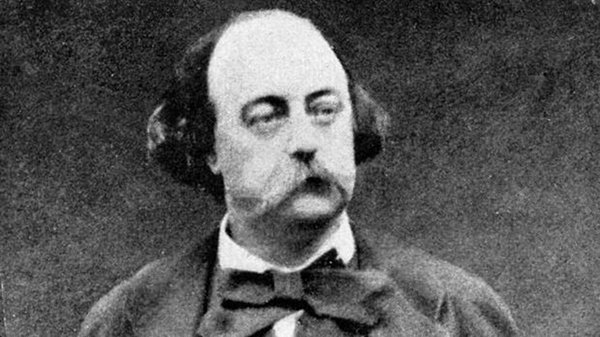
This article from The American Reader presented a letter from Gustave Flaubert (1821-1880) which reflects the charged, tempestuous affair he had with poet Louise Colet. “It was to [Colet] that Flaubert addressed the now celebrated letters on his art that make the genesis of Madame Bovary (1856)one of the best-charted in fiction.” 


Source: http://www.famousauthors.org

TO LOUISE COLET 

September 28, 1846, Croisset 

 No! Once again, no! I protest. I swear: others may feel nothing but contempt after possession, but I am not like them, and I glory in not being so. On the contrary, for me possession breeds affection. If I weren’t afraid of shocking you yet again, I’d say—indeed I will say: “Je suis comme les cigars, on ne m’allume qu’en tirant.”

…As for Mme Foucaud, she is certainly the one I knew. Is your cousin sufficiently reliable to be entrusted with a letter? Can I be sure he’ll deliver it? For I feel like writing to Mme Foucaud. She’s an old acquaintance; don’t be jealous of her. You shall read the letter if you like, on condition you don’t tear it up. Your word will be enough. If I thought of you as a commonplace woman I should not tell you this. I thought at first that I would find in you less feminine personality, a more universal conception of life. But no! The heart, the heart! That poor heart, that kind heart, that charming heart with its eternal graces, is always there, even in the noblest and greatest women. As a rule men do everything they can to vex the heart, to make it bleed. They steep themselves with subtle sensuality in all those tears that they themselves don’t shed, in all those little agonies they see as proofs of their strength. If I had a taste for that sort of pleasure it would be easy for me to enjoy it with you.

But no, I should like to make of you something entirely apart—neither friend nor mistress. Each of those categories is too restricted, too exclusive— one doesn’t sufficiently love a friend, and one is too idiotic with a mistress. It is the intermediate term I seek, the essence of those two sentiments combined. What I want, in short, is that, like a new kind of hermaphrodite, you give with your body all the joys of the flesh and with your mind all those of the soul. Will you understand that? I fear it isn’t clear. It’s strange how bad my writing is, in these letters to you; I put no literary vanity into it. One thing conflicts with another. It’s as though I wanted to say three words at a time.

…In writing this to you, I’m inaugurating my new armchair, in which I am destined to spend long years—if I live. What will I write in it? God knows. Will it be good or bad, tender or erotic, sad or gay? A little of each, probably—adding up to nothing. No matter: may this inauguration bless all my future work! Winter has come, the rain is falling, my fire is burning: now comes the season of long hours shut indoors. Soon now the silent, lamp-lit evenings, watching the wood burn and listening to the wind. Adieu, bright moonlight on the green grass, blue nights all spangle with stars. Adieu, my darling: I kiss you with all my soul…


Wednesday, September 28, 2016

Letters in Books: Federico García Lorca. Cartas escogidas

Hay escritores que fueron grandes correspondientes, como Gustave FlaubertJohn KeatsHenry James o Lord Byron que despuntaron en sus cartas. No se puede decir lo mismo de otros, que a pesar de ser grandes escritores, destacaron menos en su correspondencia personal. William Butler Yeats y James Joyce escribían sobre sus preocupaciones por nimiedades y Thomas Mann escribía en un estilo pomposo casi rayando la pedantería. 

Federico García Lorca pertenece al primer grupo. Todavía no he leído Querido Salvador, Querido Lorquito (2013), el epistolario entre los dos artistas, considerado "uno de los más vibrantes del siglo XX", pero sí acabo de disfrutar de Cartas escogidas (1999), una selección de Barbara Cavallero que recoge misivas enviadas a su familia y amigos (Ángel Barrios, Adolfo Salazar, Jorge Guillén, Salvador Dalí o Miguel Hernández entre otros). 

Es un epistolario breve, pero condensa la inteligencia, ingenio e inventiva de Lorca. Su joie de vivre permea las líneas de su escritura, y la voz que escuchamos es singular, irreverente y divertida. Un verdadero placer lector que completa el retrato extraordinario de un hombre complejo y brillante que desafió y cambió las  corrientes literarias de su época. 


[A Adriano del Valle] "Soy un pobre muchacho apasionado y silencioso que, casi, casi como el maravilloso Verlaine, tiene dentro una azucena imposible de regar y presento a los ojos bobos de los que me miran una rosa muy encarnada con el matiz sexual de peonía abrileña, que no es la verdad de mi corazón" (p. 14)

"Ahí va toda mi mano izquierda, que es la de mi corazón" (p. 17)

[A su padre] "¿Qué hago yo ahora en Granada? Escuchar muchas tonterías, muchas discusiones, muchas envidias y muchas canalladas (esto naturalmente no les pasa más que a los hombres que tienen talento" (p. 19, 20)

[A Antonio Gallego Burín] "Yo espero que el campo pula mis ramas líricas este año con las rojas cuchillas de las tardes" (p. 24)

[A Regino Sainz de la Maza] "Mis manos están llenas de besos muertos (manzanas de nieve con el surco tembloroso de los labios) y espero lanzarlas al aire roto para coger otros nuevos" (p. 26)

[A Adolfo Salazar] "Hay amistades que se escurren de las manos como el agua clara, otras son como una rosa que uno se prende despreocupadamente en el ojal, pero las verdaderas amistades son como los chupapiedras de los niños andaluces, son lapas que se plantan silenciosamente sobre el corazón" (p. 28)

[A Regino Sainz de la Maza] "Yo vivo en prestado, lo que tengo dentro no es mío, veremos a ver si nazco. Mi alma está absolutamente sin abrir. ¡Con razón creo algunas veces que tengo el corazón de lata!" (p. 37)

(sobre Cadaqués) "El horizonte sube construido como un gran acueducto. Los peces de plata salen a tomar la luna y tú te mojarás las trenzas en el agua cuando va y viene el canto tartamudo de las canoas de gasolina" (p. 46)

[A Melchor Fernández Almagro] "El mundo es una espalda de carne oscura (negra carne de mulo viejo). Y la luz está al otro lado.
Yo quisiera quedarme desnudo como un cero y contemplar" (p. 51)

[A Jorge Zalamea] "El unicornio quiere lo que la rosa olvida
y el pájaro pretende lo que las aguas vedan" (...) Este verso, "El unicornio quiere lo que la rosa olvida", me gusta mucho. Tiene un encanto poético indefinido de conversación borrada" (p. 80)

[A Miguel Hernández] "Mi querido poeta:
No te he olvidado. Pero vivo mucho y la pluma de las cartas se me va de las manos" (p. 106)

En la exposición de las preocupaciones y los acontecimientos diarios de la vida de Lorca, sus estudios, el proceso de escritura de sus poemas, su viaje a Nueva York,...  se nos recuerda constantemente la fertilidad de su talento, y nos hipnotiza su entusiasmo poético. Son documentos de vida y arte que hacen las delicias de los amantes de la literatura.

Fotografía de Raquel Pastoriza


Tuesday, May 17, 2016

Letters in Music: "Gymnopédies"

I am by no means a classical music expert, that's why in this case I will copy part of the entry from Storyacious, an online-only literary, arts and music magazine which included an excellent review of Erik Satie's Gymnopédies.


"There are some pieces of classical music that, when you listen to them, feel as if every nerve, muscle, tissue in your body is gently unfurling under soft waves of cool, flowing water. If you ever need one of those slow-yourself-down moments, try Erik Satie’s  (1866-1925) brilliant Gymnopédies.


Satie said that he was inspired by Gustave Flaubert’s novel, Salammbô, for these particular musical compositions. And, you get the impression, as you listen, that, like Flaubert’s obsession to find the right word (le mot juste) in his story-writing, Satie, as fellow countryman, must have obsessed over just the right notes and progressions in his composing.

Interestingly, Debussy, another popular French composer and friend of Satie’s, orchestrated the music — #s 1 and 3 — but transposed them. So, what we listen to now as #1 was actually composed as #3.

Satie’s music did not adhere to any aesthetic during his time. He was a minimalist to the extreme, though. And, he greatly influenced Debussy and Ravel, two other great French composers, who we will also get to soon. Some consider Satie’s work to be the precursor to the ambient music movement because of the smooth, haunting and melodic arrangements. Also, he’s often called the “father of cabaret” for his piano-playing at that most famous of Montmartre night-clubs, Le Chat Noir.

Known for his dry wit and humor, in his compositions, he often had little absurd notes for the performers like “Think like a pear.” And, he named his compositions with titles such as ‘Flabby Preludes for a Dog’ and ‘Three Pieces in the Shape of a Pear’.

Satie wrote some 400 letters between 1892 and 1925 to many people, including himself (for future reminders). Many are still in private collections and unpublished. However, this published letter collection is a lovely window into him and his world. They do not include the unsent love letters to the only love of his life, his friend and neighbor, Suzanne Valadon, with whom he had a 6-month affair. She was an artist as well as an artist’s model for many famous artists at the time — e.g. Renoir. Bundles of those love letters were discovered under his bed and secreted around his Paris apartment after he died of cirrhosis of the liver from too much alcohol at age 59 years. "

I told you, you shouldn't save your letters.